
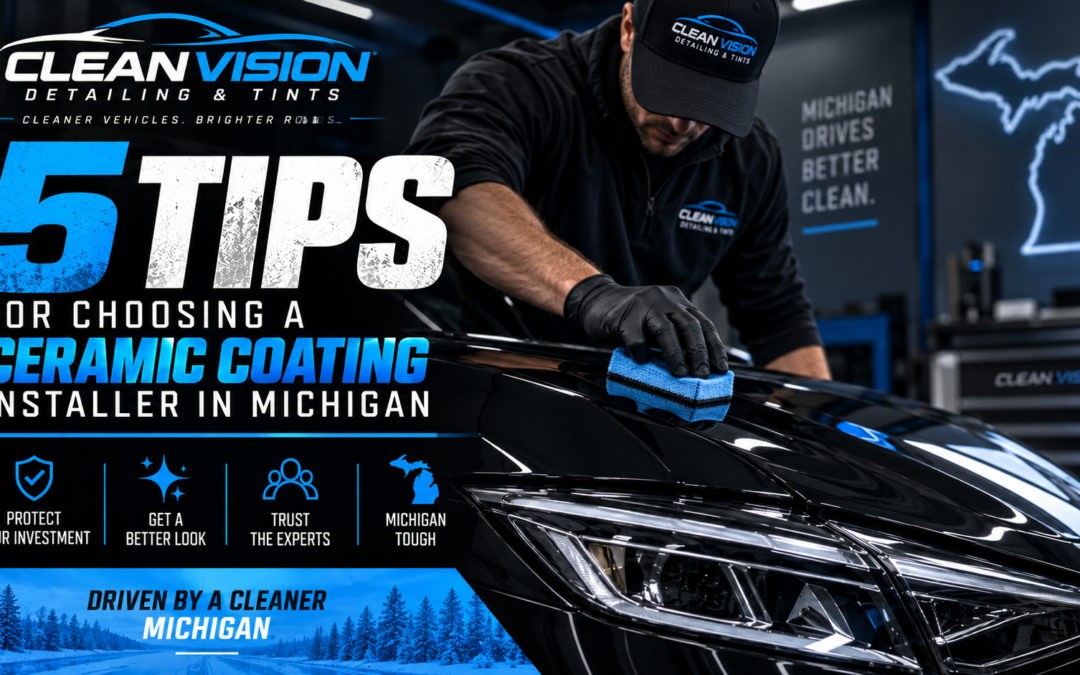
5 Tips for Choosing a Ceramic Coating Installer in Michigan
5 Tips for Choosing a Ceramic Coating Installer in Michigan
Quick answer: It’s important to consider five key factors when it comes to choosing a ceramic coating installer in Michigan. First, make sure to verify their certifications, then the shops customer reviews and portfolio on Google and social media pages. Proceed to verify their insurance and warranty coverage, and that they follow a detailed and consistent process for prep work and coating application. Finally, make sure they offer transparent pricing. Getting this right protects your paint and your wallet – for years to come.
Your new car’s paint is under constant attack. Michigan’s harsh winters, road salt, UV exposure, and debris all take a toll. Ceramic coating is one of the most effective ways to protect your vehicle’s exterior, enhance its gloss, and reduce maintenance time.
But even the best product on the market can’t compensate for poor installation. The installer you choose makes all the difference.
Here’s what to look for when searching for a ceramic coating service in Oakland County, Michigan.
Tip 1: Check Certifications and Training
Ceramic coating isn’t a DIY job, at least not if you want it done right. Look for installers certified by leading coating manufacturers like System X or Ceramic Pro. These certifications signal that the technician has completed formal training, understands proper application techniques, and stays current with product updates.
Certification also matters for warranty purposes. Many manufacturer warranties are only valid when an authorized installer applies the product. Don’t skip this step.
Tip 2: Review Customer Reviews and Portfolio
Reviews tell you what a website can’t. Check Google, Yelp, and industry-specific platforms for verified feedback from real customers. Pay attention to comments about prep work, communication, and long-term results, not just the finished shine on day one.
Ask the installer directly for before-and-after photos of previous ceramic coating jobs. A confident, experienced professional will have a portfolio ready. If they hesitate, that’s a red flag.



Tip 3: Verify Insurance and Warranty Coverage
Accidents happen. A reputable ceramic coating installer carries liability insurance to cover any damage to your vehicle during the process. Before you hand over your keys, confirm this coverage is in place.
Equally important: ask about warranty terms. A quality installation should come backed by both a materials warranty and an artistry guarantee. Vague answers here are a sign to keep looking.
Tip 4: Ask About the Application Process and Paint Preparation
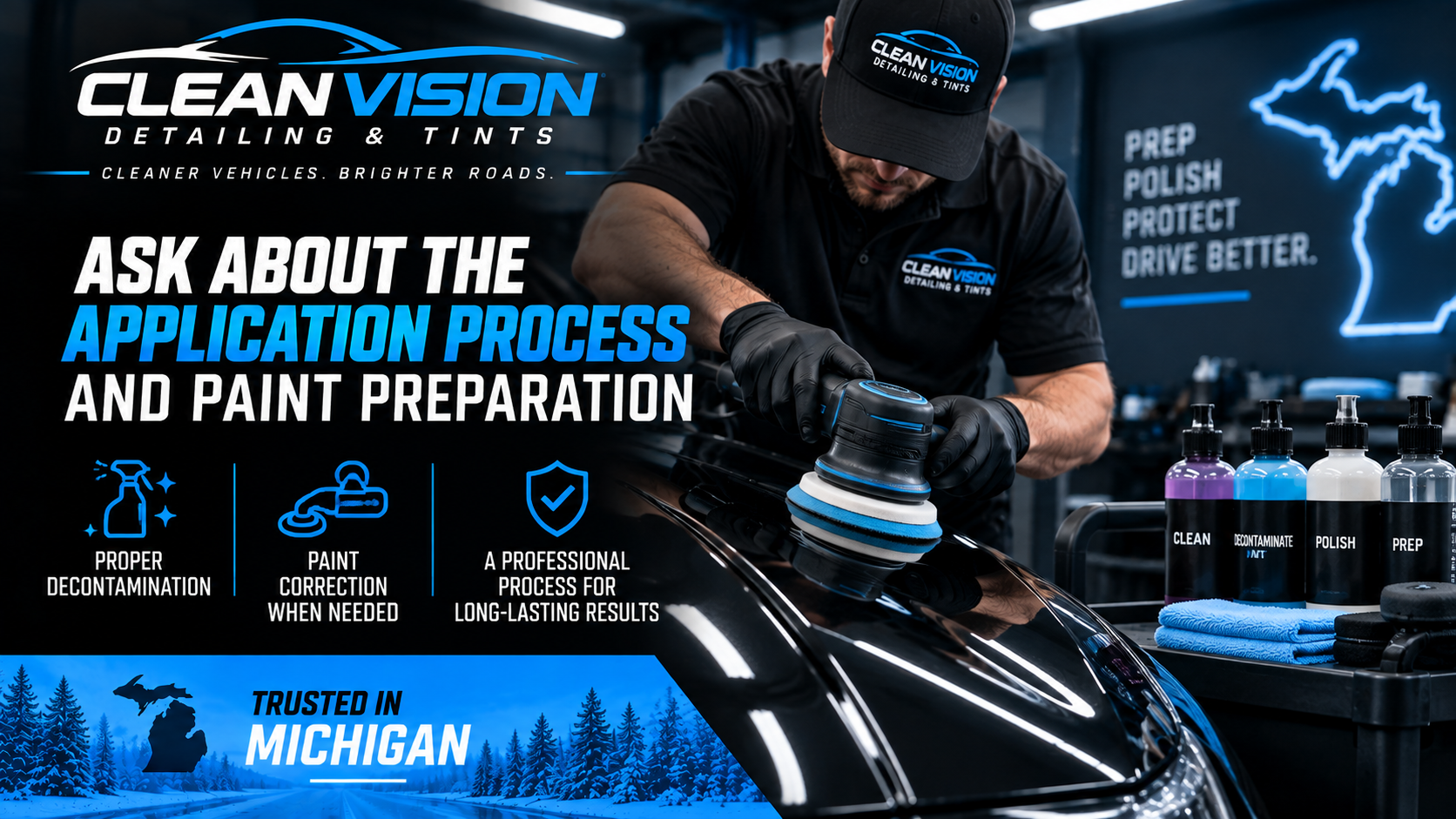
The secret to a long-lasting ceramic coating isn’t just the product; it’s the prep. Quality installers follow strict preparation protocols, which typically include a thorough decontamination wash, a clay bar treatment, and paint correction to remove swirl marks and light scratches before the coating is applied.
Ask specifically about curing time and post-application care. A professional who gives you a detailed rundown of the process – rather than a vague “we’ll take care of it” – takes their craft seriously.
Tip 5: Compare Pricing and Service Packages in Michigan
Ceramic coating costs vary, so get at least two or three quotes before committing. Michigan pricing will differ based on vehicle size, coating brand, and the level of paint correction needed. The cheapest option is rarely the best one.
Make sure each quote clearly outlines what’s included: paint prep, the coating application itself, curing, and warranty coverage. Hidden costs have a way of showing up later if you don’t ask about them up front.
Frequently Asked Questions
What does a ceramic coating service in Oakland County, Michigan typically cost?
Pricing varies based on vehicle size, paint condition, and coating tier, but most professional ceramic coating services in Oakland County range from $500 to $2,000+. Paint correction, which is often necessary before application, can add to the total cost.
How long does a professional ceramic coating last?
A professionally applied ceramic coating typically lasts two to five years, depending on the product and how well the vehicle is maintained. Higher-tier coatings from brands like Ceramic Pro can last longer with proper care.
Is paint correction necessary before ceramic coating?
In most cases, yes. Paint correction removes swirl marks, light scratches, and surface contamination before the coating is applied. Skipping this step permanently locks those imperfections beneath the coating.
How do I know if a ceramic coating installer is certified?
Ask the installer directly which brands they’re certified with, such as GYEON or Ceramic Pro, and request proof. You can also verify certification status on the manufacturer’s official website.
How soon can I drive my car after ceramic coating?
Most coatings require a curing period of 24 to 48 hours before the vehicle is exposed to water or dirt. Your installer should provide specific post-application care instructions based on the product used.
Protect Your Investment with the Right Installer
Taking time to vet your ceramic coating installer isn’t being overly cautious; it’s being smart. A properly applied coating protects your paint for years, enhances your vehicle’s resale value, and makes maintenance significantly easier. A rushed or under-qualified installation does none of those things.
For Oakland County residents, Clean Vision Detailing and Tints stands out as a premier ceramic coating service in Oakland County, Michigan. Their certified technicians, transparent process, and commitment to quality make them a trusted choice for vehicle owners who care about doing it right.
Do your homework, ask the right questions, and your paint will thank you for years to come.


